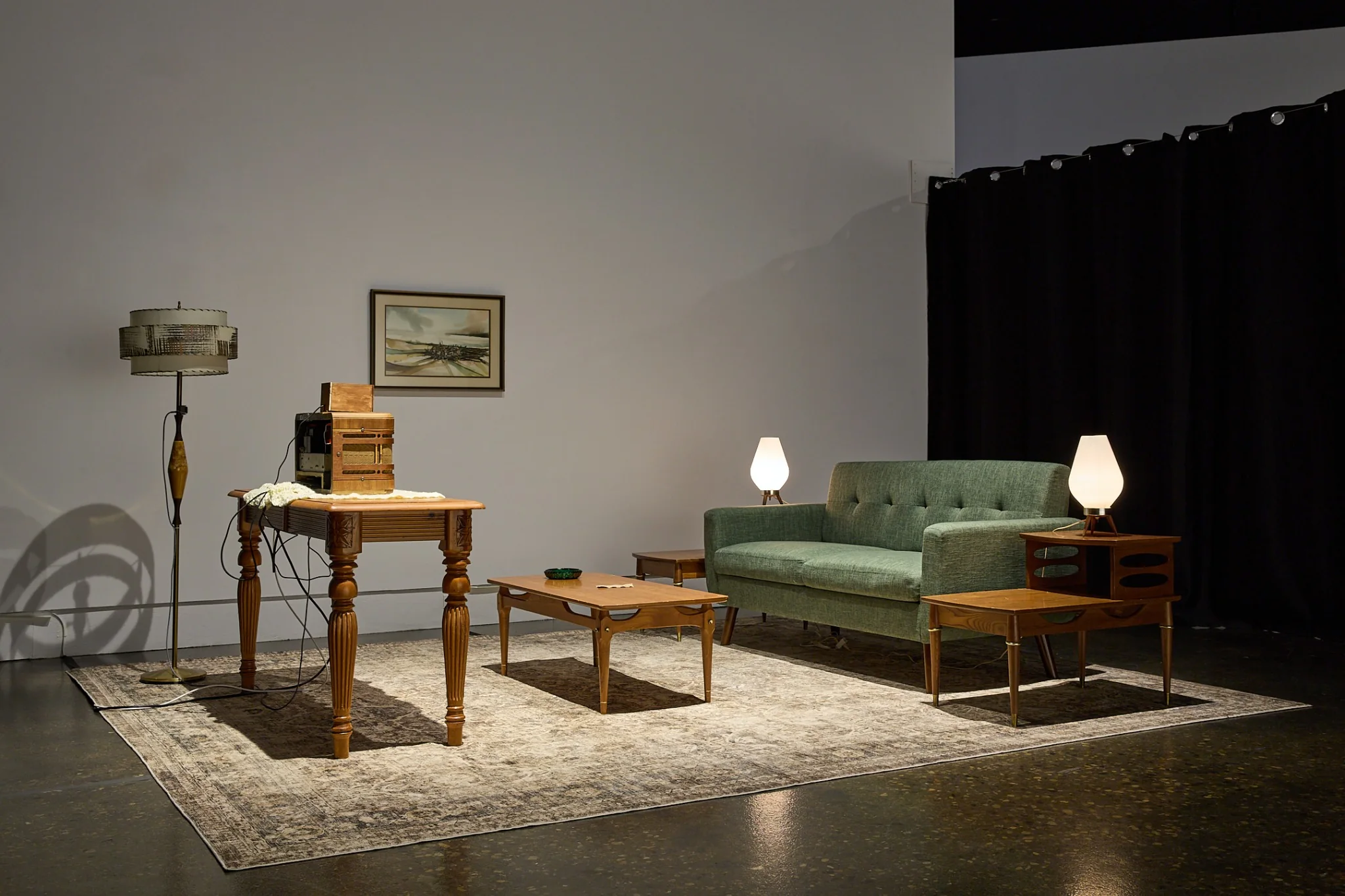
The Victory Box begins with a fictional object: a Cold War-era home security console supposedly distributed to selected households under a public safety program. Its wooden cabinet, rounded edges, period controls, speaker grille, camera, and small display make the device feel discovered rather than invented.
The exhibition gives this object a history. A synthetic investigative documentary, advertisements, field photographs, manuals, and government records operate as mutually reinforcing evidence. Each component borrows the visual authority of a recognizable institution: public television, the museum, the archive, consumer advertising, and state documentation. The fiction becomes persuasive not because any single image is flawless, but because the images agree with one another.
This strategy connects the history of psychological operations and integration propaganda to the present conditions of generative media. Contemporary AI can produce not only one false photograph but an entire supporting world: witnesses, documents, moving images, voices, technical diagrams, and institutional narratives. The work uses these capacities critically, making their persuasive force spatial and experiential.
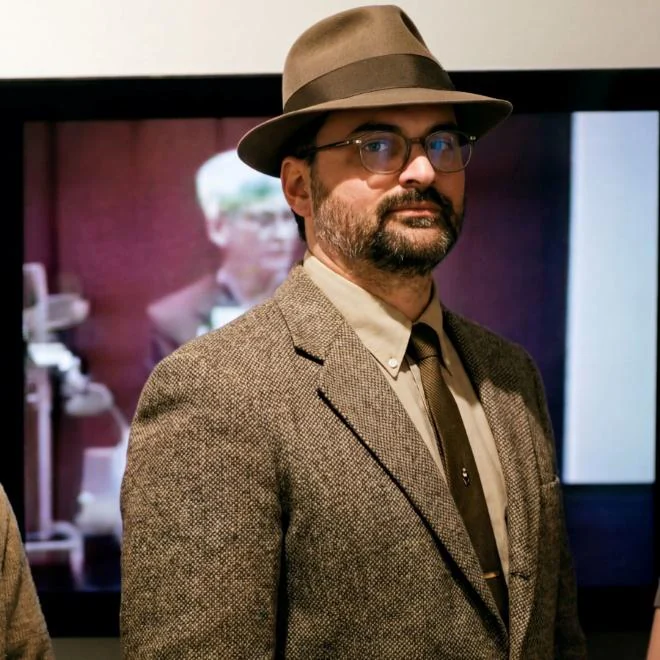
The viewer is not left outside the system. A camera embedded in the Victory Box records short clips, while another camera captures the monitoring area. A local browser-based compositor maps live and recorded material onto the monitors watched by synthetic security agents. The visitor becomes an operational image: a picture made not merely to be viewed, but to perform surveillance and classification inside the installation.
The final interruption does not dismiss the fiction as a trick. It separates historical accuracy from operational truth. The Victory Box never existed, but the methods used to make it persuasive - surveillance, emotional reassurance, institutional authority, synthetic evidence, and automated image processing - are real and increasingly ordinary.