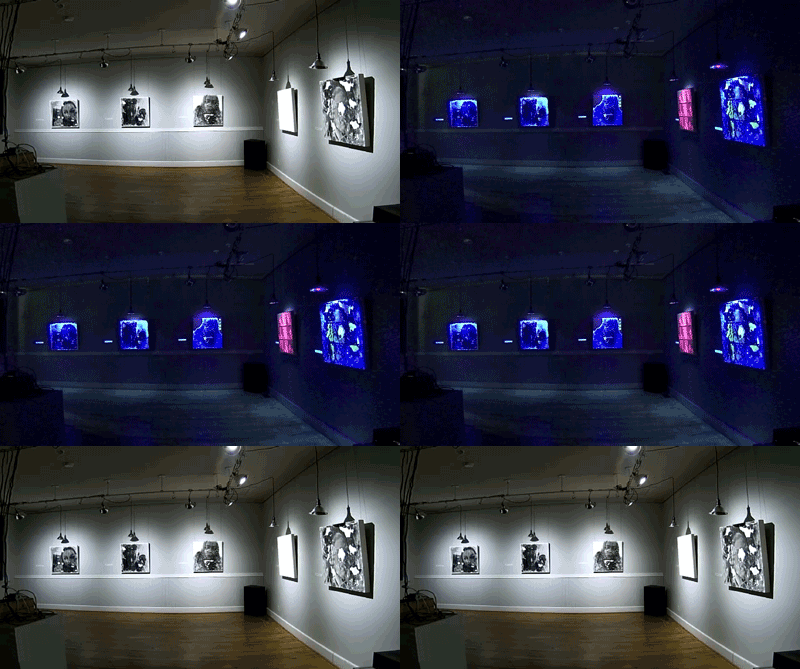
How to Clear Your Browser History creates an immersive environment of paintings, light, sound, cameras, and custom electronics that makes the unease of being watched physically present. The work begins with images taken from public video-chat spaces and transforms them into gel-transfer portraits whose surfaces contain hidden chat transcripts, QR-like markers, and digital traces that appear only under ultraviolet light.
The installation asks viewers to consider what it means for online exchanges to feel temporary while also being available to capture, store, analyze, and repurpose. It connects intimate digital communication to larger surveillance systems, especially the government and intelligence practices revealed through programs such as the NSA and GCHQ webcam-collection disclosures.
The paintings
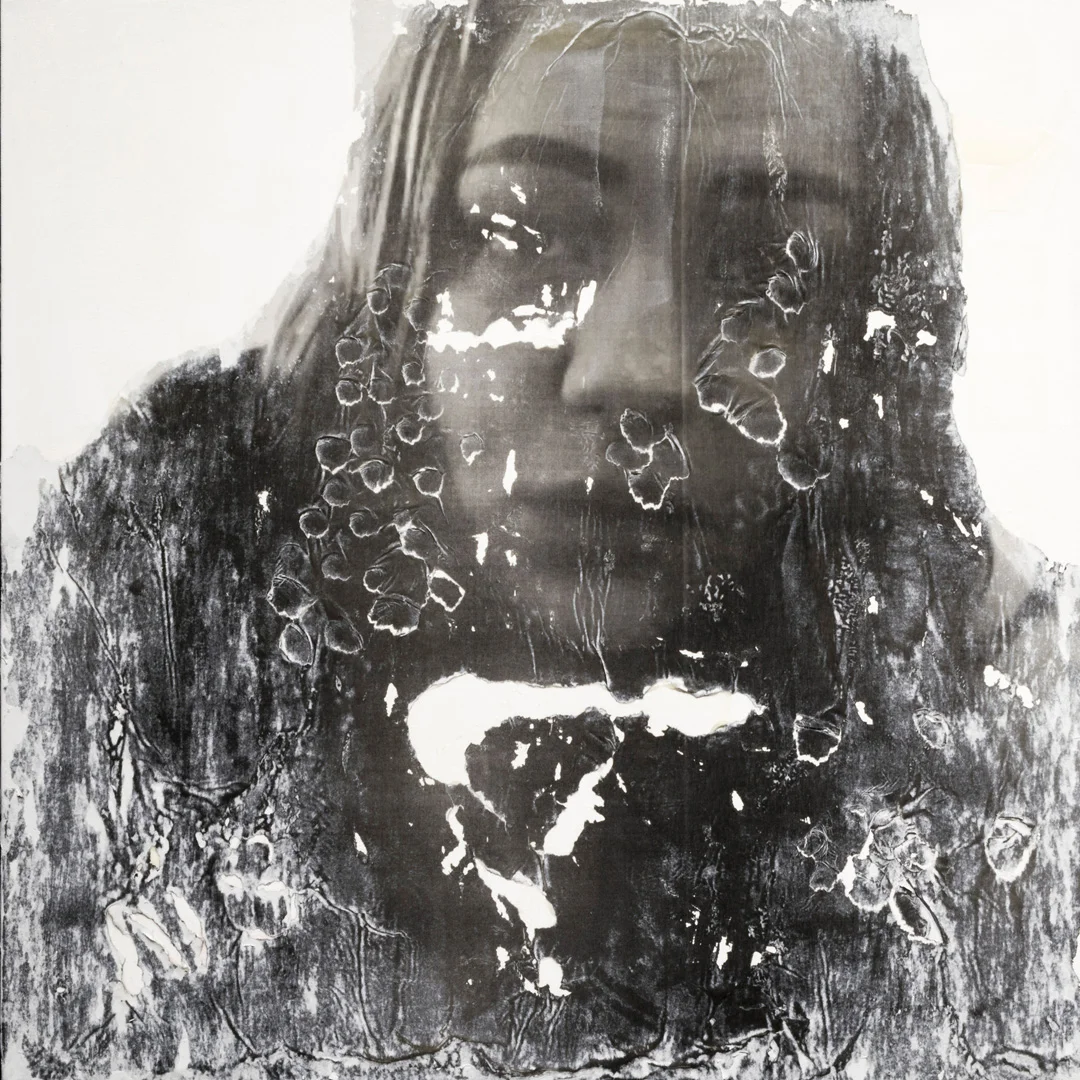
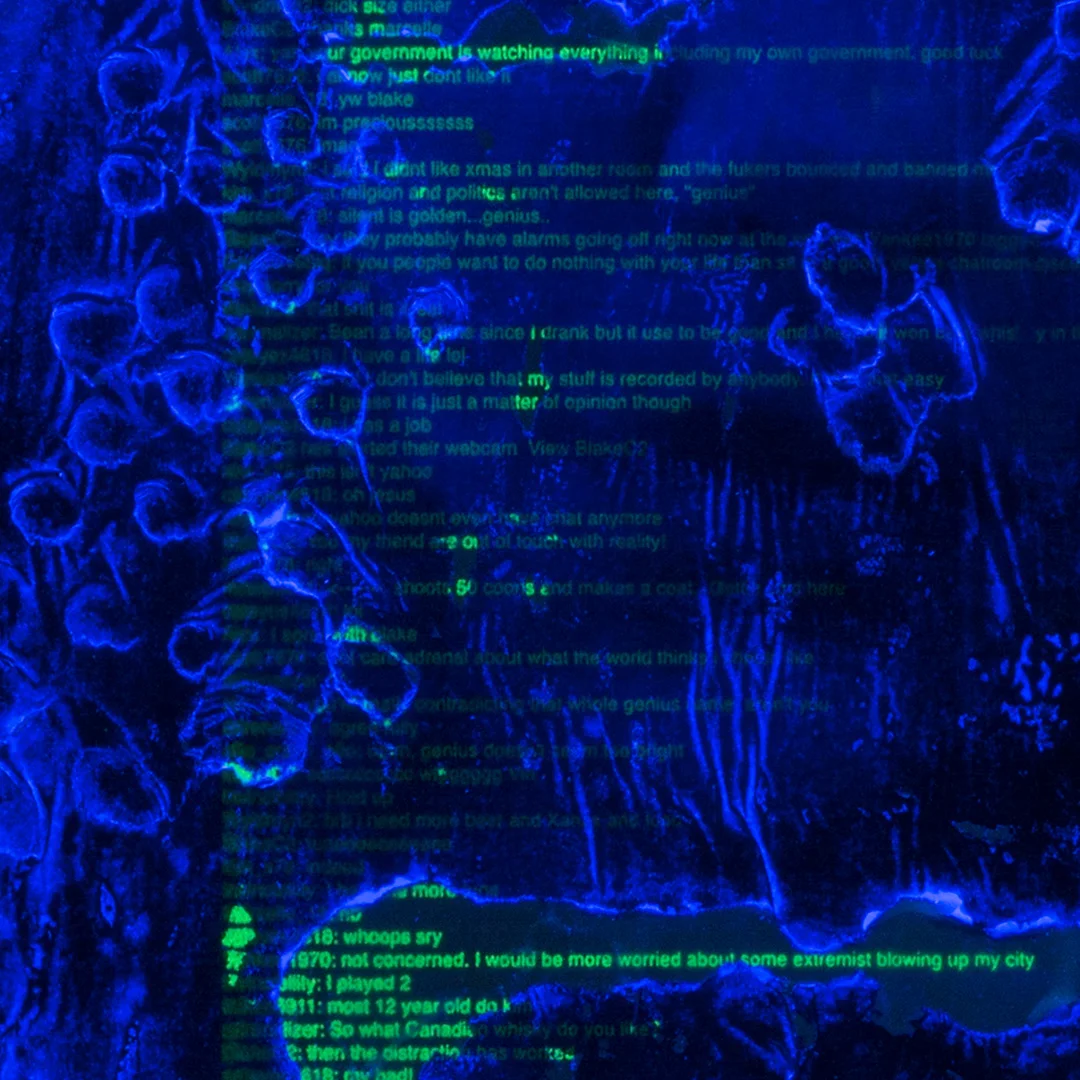
The painting series uses portraits of people encountered in public chatrooms as a way to examine digital identity and involuntary visibility. These figures are not presented as documentary portraits in a traditional sense; they are treated as fragments of a wider system where anonymous or semi-anonymous online presence can become an image file, a data point, or an archival trace.
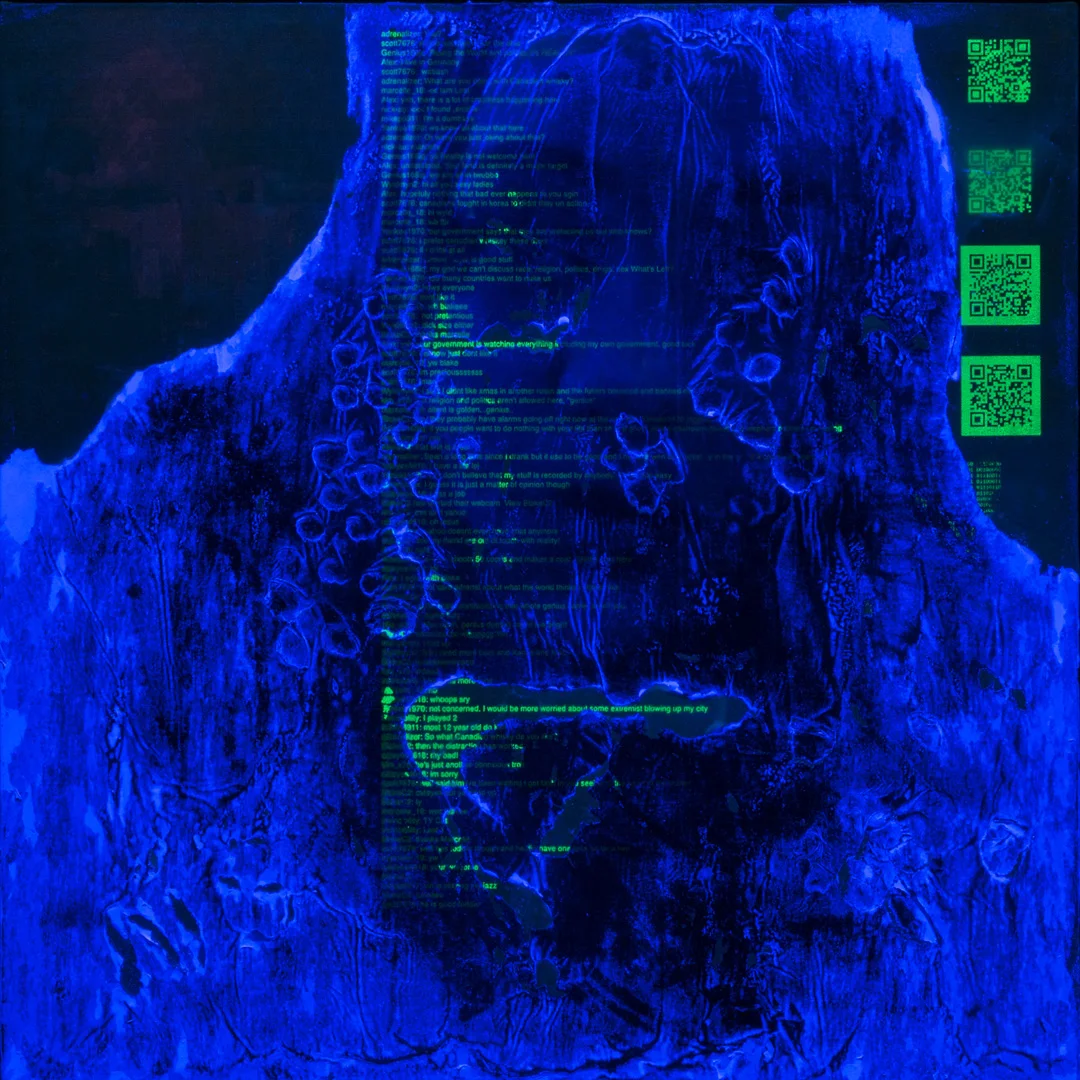
Each work combines a gel-transfer image with silkscreened chat transcripts rendered in phosphorescent pigment. Under ordinary light, the textual layer is nearly absent. Under UV light, the transcripts return as a spectral field of language, suggesting how seemingly vanished conversations remain recoverable within systems of storage and surveillance.
Revelation as lighting system
The lighting system is both practical and conceptual. Ordinary gallery lighting allows the portraits to appear as quiet black-and-white images. Arduino-controlled UV lighting periodically reveals the concealed phosphorescent text, turning the act of looking into a timed disclosure.
This alternation between visible and hidden information mirrors the logic of online surveillance. The viewer encounters one surface, then discovers another: an image that appeared stable becomes a record of speech, behaviour, and captured presence. The technology becomes a bridge between the seen and unseen, between the viewer’s assumption of privacy and the system’s capacity to retain.
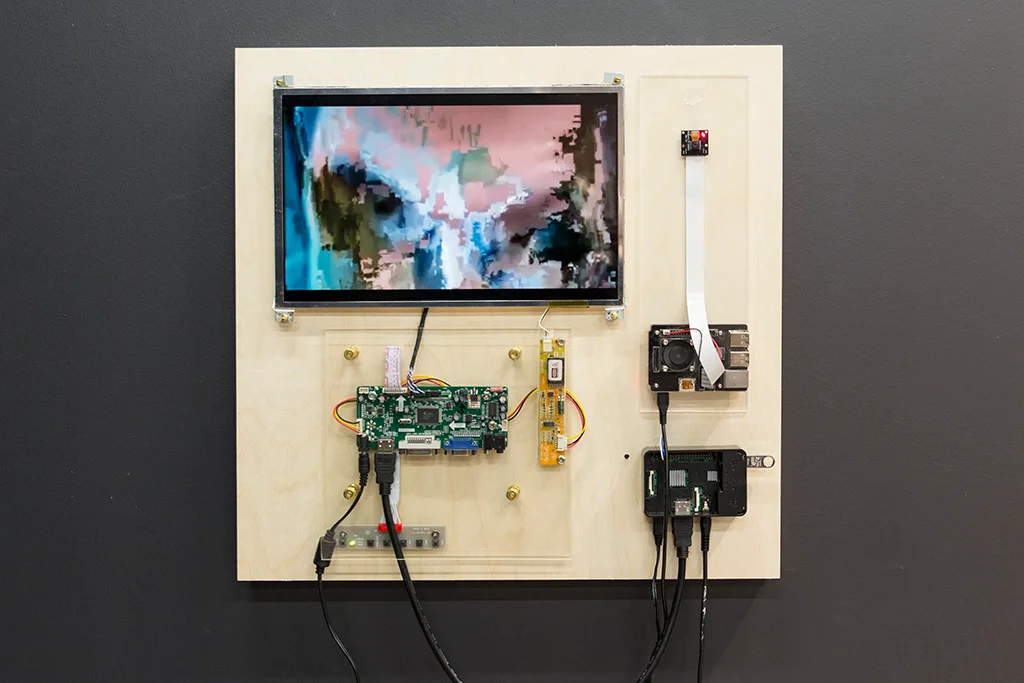
Transceiver No. 1
Transceiver No. 1 extends the painting installation into a live technological system. Built from electronic components mounted on a wooden panel, it includes an LCD screen, exposed circuitry, a small camera, and media hardware. The screen plays a distorted video composition that blends livestream fragments, chatroom imagery, and traces of law-enforcement or military visual language into an unstable, disorienting feed.
While viewers watch this abstracted digital stream, a discreet camera waits for a face. Triggered by facial-recognition software, the device captures the viewer and folds them into the same logic being critiqued. The work shifts from representing surveillance to performing it.
The viewer is drawn toward a degraded video feed of networked images and surveillance language.
A hidden camera and face-detection process identify the viewer as a subject within the room.
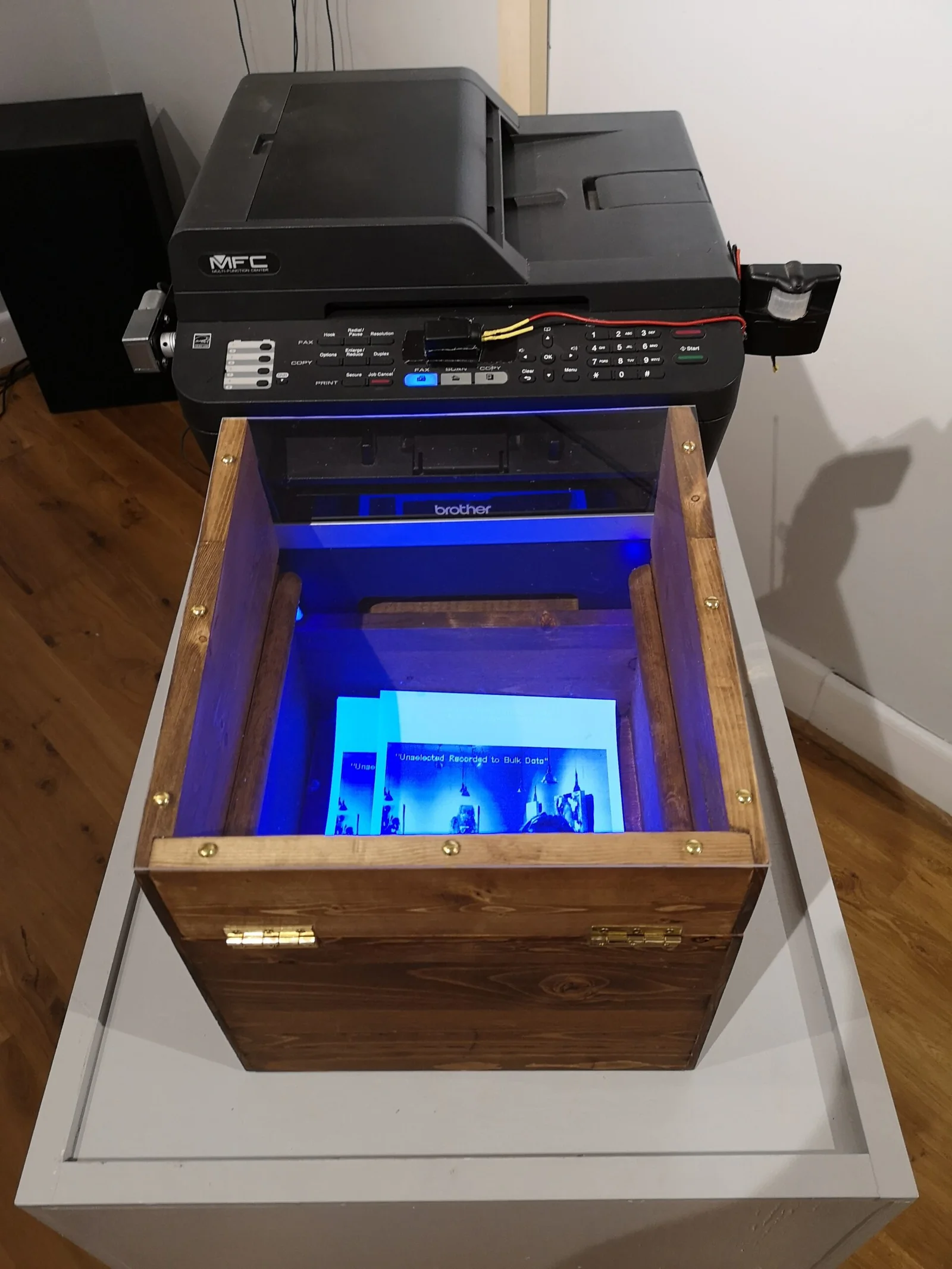
The captured image is sent onward to a receiver, where it becomes a physical record.
Receiver and locked box
The captured visitor image is routed to Receiver No. 1, where it is printed and ejected into a locked wooden box. The viewer can see the printed records inside, but cannot access or remove them. This makes the box a physical metaphor for the digital archive: evidence exists, ownership is unclear, and control belongs to the system rather than to the subject being recorded.
The locked box also echoes the recurring tension of the project. Online participation feels casual, fleeting, and voluntary, but the records it produces may become persistent, extractable, and inaccessible to the person who generated them.
Sound, delay, and the room as system
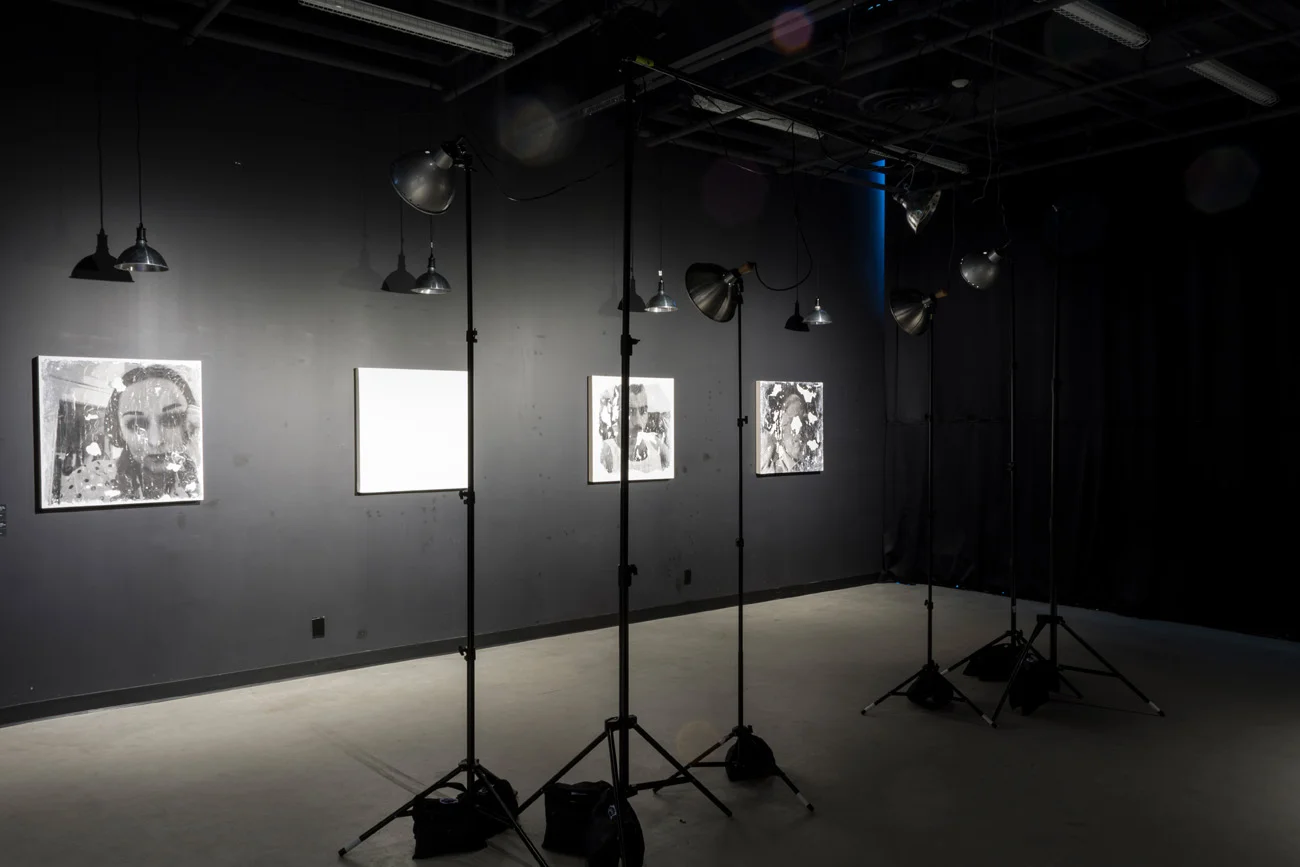
Additional electronic panels, analogue and digital recording devices, delayed video feeds, and repurposed mobile devices extend the atmosphere of surveillance throughout the installation. The room does not present a single object to be looked at; it produces a condition in which looking, listening, recording, and being recorded overlap.
The sound environment includes an unsettling combination of drone, text-to-speech readings of targeted chatroom keywords, and a partial reading of George Orwell’s 1984. These elements give the room a persistent low-level pressure, reinforcing the feeling that the viewer is inside a technological apparatus rather than simply observing one.