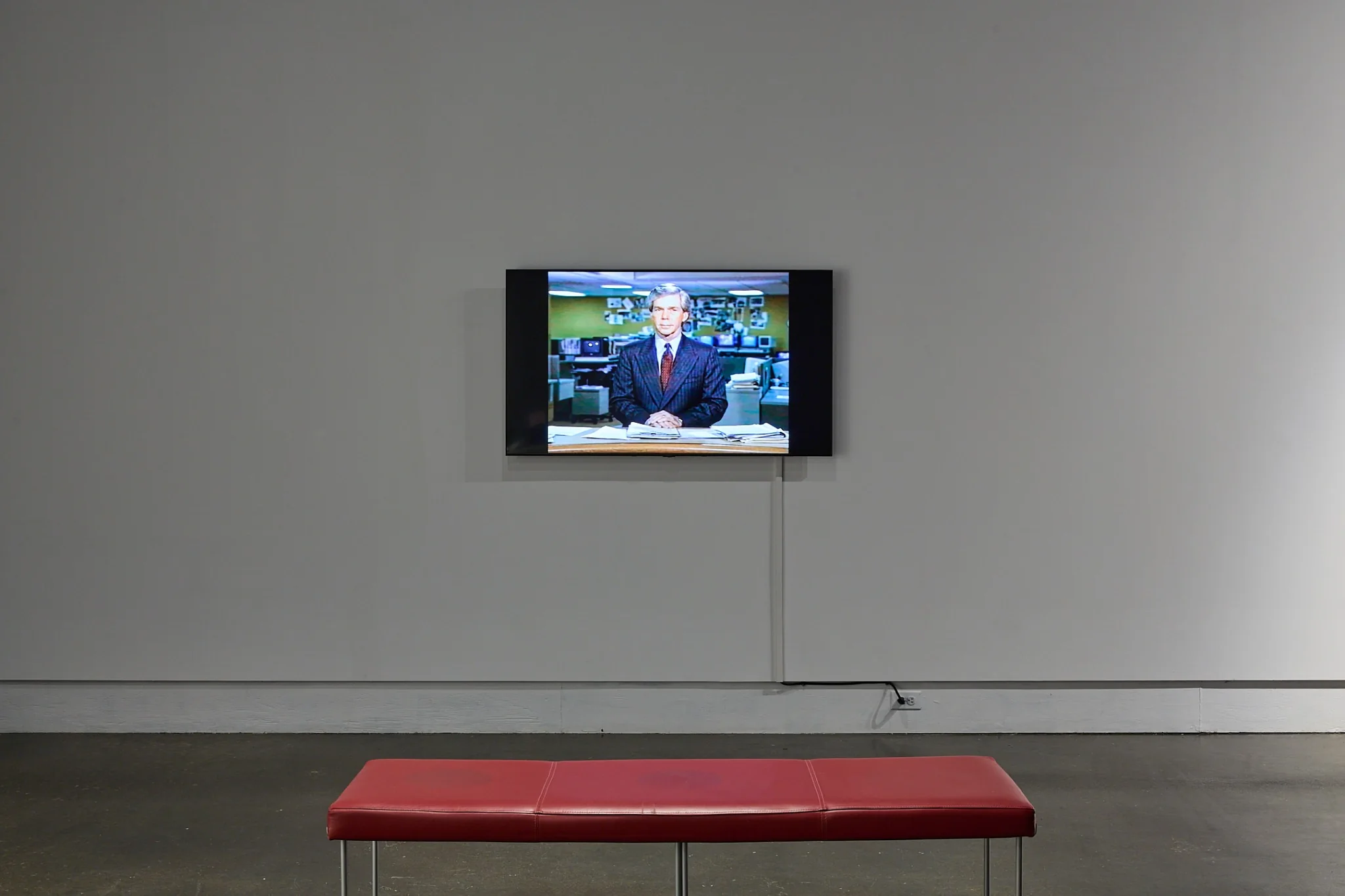
The Victory Box Documentary is designed as a mid-1990s public-television or museum film looking back on an alleged 1950s domestic surveillance program. Interviews, archival footage, diagrams, testimony, and institutional narration are all synthetic, but are organized to feel historically coherent and trustworthy.
Watch the documentary
A documentary that teaches the viewer how to believe
The film introduces the Victory Box as a patriotic home-safety appliance before revealing hidden microphones, visual capture, emotional monitoring, and psychological operations. Its exposé structure gives the viewer the reassuring feeling that a secret history has finally been explained.
Because the device, witnesses, archive, and retrospective institution are all fabricated, the work turns documentary form itself into the subject.
Three stacked historical moments
The documentary contains a fictional 1950s program, a fictional 1990s act of historical recovery, and the actual contemporary moment in which generative AI produces both layers.
This temporal stacking allows the work to test how quickly familiar grain, broadcast pacing, interview conventions, and institutional voice can create the experience of evidence without an original event.